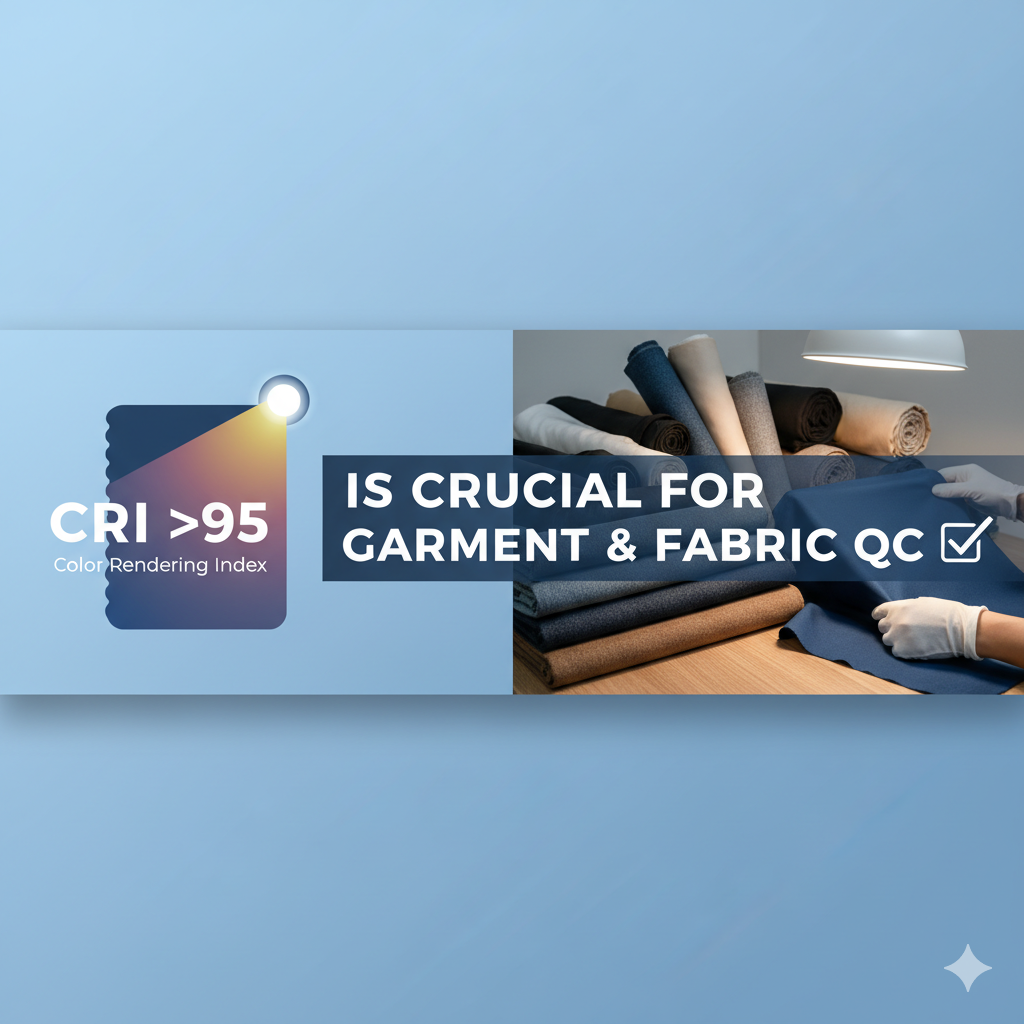
Why CRI >95 Matters in Garment & Fabric QC
1. Accurate Color Matching
In textiles, color consistency is critical. Garments are often produced in batches, and different fabrics or accessories (zippers, buttons, threads) must match exactly.
High CRI lighting ensures the true color of the fabric is visible.
Helps detect shade variations between dye lots or rolls.
Prevents expensive color mismatches that may not be visible under low CRI lighting but show up in natural light.
Example: Under a CRI 70 light, a navy blue may appear almost black. Under CRI 95+, you can distinguish the exact shade and tone.
2. Reliable Quality Judgement
QC inspectors check for more than just color—they assess:
Stains
Weaving defects
Uneven dyeing
Print clarity
These flaws can be missed under poor lighting but are clearly visible under CRI >95 lighting, helping to avoid defective products reaching customers.
3. True-to-Life Fabric Presentation
Retailers and designers demand consistency in visual appearance from design to production. High-CRI lighting helps:
Reproduce the true appearance of the fabric, including texture and glossiness.
Ensure fabrics look the same in the store as they do during QC checks.
Imagine: A satin fabric may look matte under poor CRI light, but its actual sheen is critical for design intent.
4. Accurate Photography & Documentation
Garment QC often includes photographic documentation for remote approval or digital records. CRI >95 lighting is essential for:
Capturing accurate color and detail in photos.
Reducing the need for color correction in post-processing.
Ensuring that what’s shown in photos matches the real product.
5. Compliance with Industry Standards
Many global apparel brands require factories and labs to use standardized lighting conditions, often specifying:
Using CRI >95 lighting ensures compliance with:
- ISO 3664 (for viewing conditions)
- AATCC and ASTM standards for color evaluation
6. Reduces Costly Reworks and Returns
High CRI lighting helps catch defects early.
Prevents customer dissatisfaction due to mismatched colors or poor visual quality.
Reduces rework, recalls, or brand reputation damage.