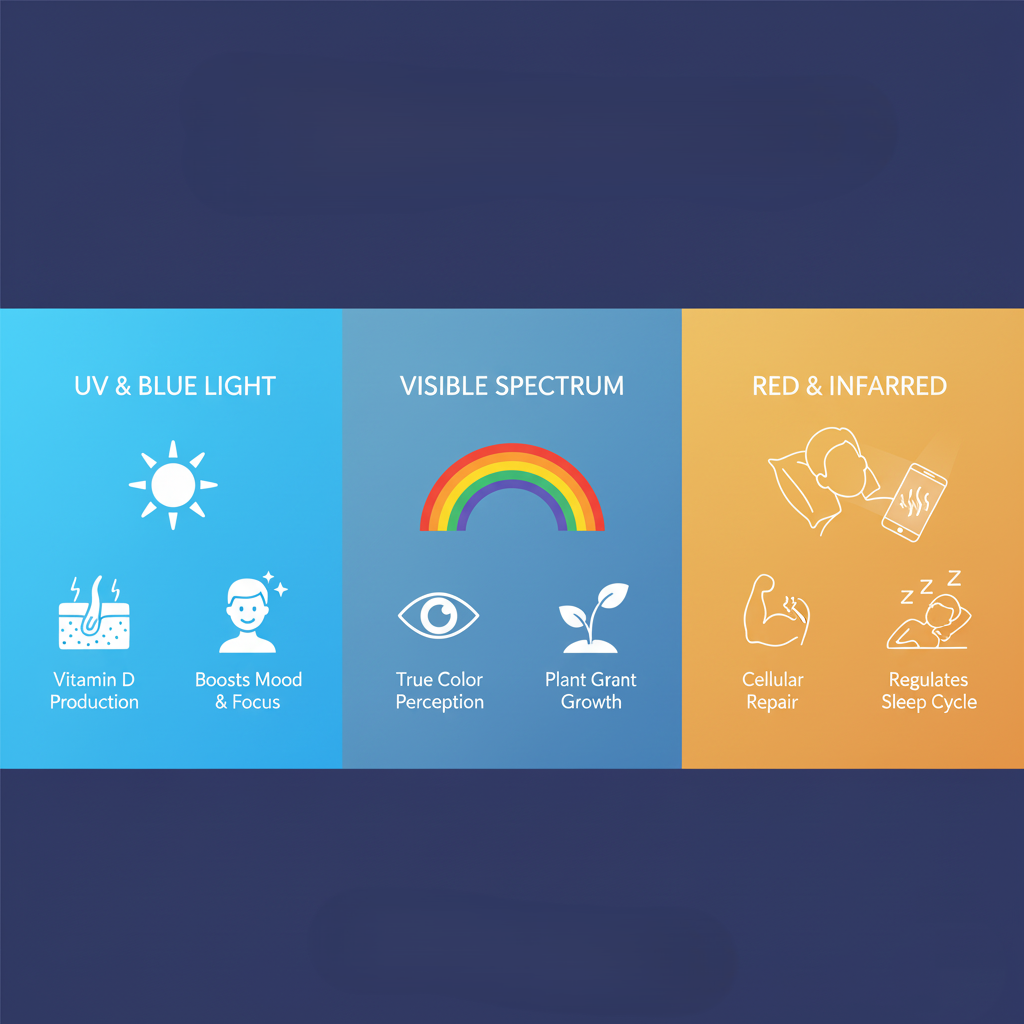
Sunlight is more than just light and warmth—it’s a natural, full-spectrum energy source that plays a critical role in human health, both physically and mentally. The sunlight spectrum contains a wide range of electromagnetic wavelengths, from ultraviolet (UV) to visible light to infrared (IR). Each part of the spectrum interacts with the human body in unique and essential ways.
The sunlight spectrum includes the following major components:
| Spectrum Range | Wavelength | Role in Health |
|---|---|---|
| Ultraviolet (UV) | 100–400 nm | Vitamin D synthesis, skin/tissue effects |
| Visible Light | 400–700 nm | Mood regulation, vision, circadian rhythm |
| Infrared (IR) | 700–2500+ nm | Heat, blood circulation, cellular repair |
Sunlight delivers full-spectrum exposure, unlike artificial light sources that typically offer narrow bands.
Ultraviolet (UV) Light – Vital for Vitamin D Production
Benefits:
UVB rays (280–315 nm) trigger Vitamin D synthesis in the skin.
Vitamin D is essential for:
Bone health (calcium absorption)
Immune function
Hormonal balance
Muscle strength
Small, controlled doses of sunlight help prevent rickets, osteoporosis, and immune deficiency.
Overexposure to UV, especially UVA (315–400 nm), increases the risk of skin cancer, sunburn, and premature aging.
Safe sun exposure is time- and skin-type-dependent (e.g., 10–30 minutes/day for most people).
The visible light spectrum (400–700 nm) is responsible for sight, but also has deeper effects on brain chemistry and biological rhythms.
Bright natural light boosts serotonin production, a neurotransmitter linked to:
Positive mood
Calmness
Focus
Lack of sunlight is linked to Seasonal Affective Disorder (SAD), a type of depression.
Blue light (especially 460–480 nm) helps regulate the circadian clock by signaling daytime to the brain.
This affects:
Sleep-wake cycles
Alertness
Hormone production (e.g., melatonin, cortisol)
Exposure to natural daylight may help prevent myopia (nearsightedness) in children and young adults.
Balanced light exposure supports retinal development and visual comfort.
Infrared light (above 700 nm) is not visible to the human eye but is felt as heat.
Infrared A (IR-A) penetrates skin and tissues, stimulating:
Blood circulation
Cell repair
Detoxification through sweating
Infrared therapy (used in physiotherapy and saunas) mimics these benefits artificially.
Natural IR from the sun helps regulate body temperature and supports metabolic function.
Daily sunlight exposure helps balance critical hormonal and immune functions:
| Function | Sunlight Role |
|---|---|
| Melatonin | Regulated by light/dark exposure; essential for sleep and cellular repair |
| Cortisol | Sunlight in the morning helps regulate cortisol levels (stress hormone) |
| Serotonin | Bright light increases serotonin, improving mood and energy |
| Immune Regulation | Vitamin D + circadian alignment strengthen immune response |
At Bangladesh Sunlight Technology, we make choosing lights easy. Our carefully designed collections bring you modern, reliable, and timeless lighting solutions.
We deliver premium-quality LED lighting at the best value. From our own innovations to trusted partner products, every option is built for efficiency and durability.
We understand lighting can feel complex. Our expert and friendly support team is always ready to guide you toward the right solution with confidence.
At Bangla BaTi, we go beyond just lighting—we deliver innovation, reliability, and future-ready solutions tailored to your lifestyle, business, and projects.
You cannot copy content of this page