Light Academy :

Effects of Blue Light on Eyes & Sleep – Detailed Explanation

Blue light is part of the visible light spectrum with short wavelengths (approximately 415–495 nm) and high energy. It’s naturally emitted by the sun but also by LED screens, smartphones, tablets, computers, and artificial lighting.

While some blue light exposure is essential for regulating biological functions like mood and alertness, excessive or poorly timed exposure—especially at night—can negatively affect eye health and sleep.

Where Does Blue Light Come From?

Natural Source:

  • Sunlight – Contains the full spectrum of visible light, including blue light

Artificial Sources:

  • LED and fluorescent lighting (e.g., office lights)

  • Screens of digital devices: smartphones, tablets, TVs, computers

  • Digital billboards and automotive displays

Blue light isn’t inherently bad—the issue is exposure timing and intensity, especially before bedtime. Understanding and managing blue light can help you:

  • Protect your eye health

  • Improve sleep quality

  • Support your mental and physical performance

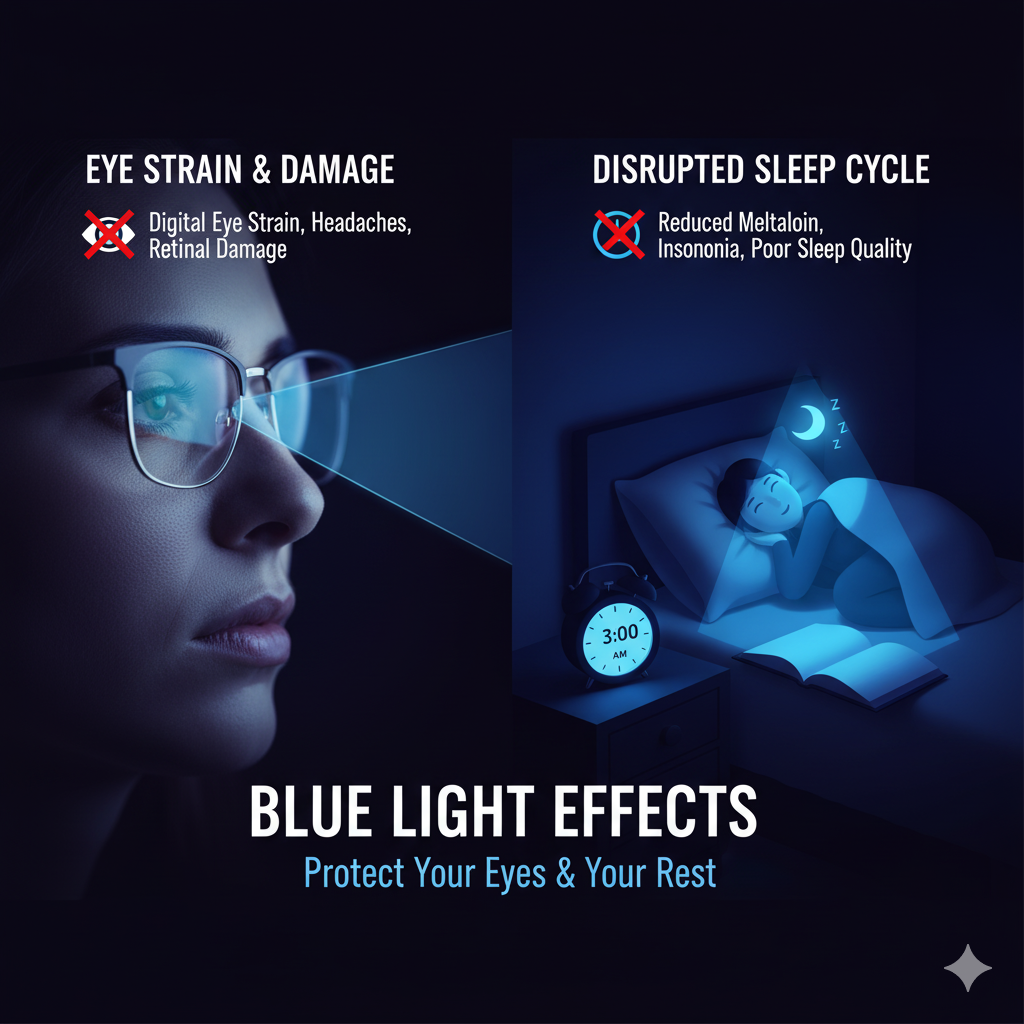
 1. Effects of Blue Light on the Eyes

A. Digital Eye Strain (Computer Vision Syndrome)

Prolonged screen exposure increases the risk of digital eye strain, especially due to blue light.

Symptoms:

  • Dry eyes

  • Blurred vision

  • Headaches

  • Eye fatigue

  • Difficulty focusing

 Why it happens:
Blue light scatters more easily than other visible light, making it harder for the eye to focus. This causes your eyes to strain more, especially in low-light environments.

B. Retinal Stress and Long-Term Damage (Potential Risk)

Some studies suggest that long-term, intense exposure to blue light may damage light-sensitive cells in the retina.

  • This could potentially contribute to age-related macular degeneration (AMD).

  • However, more research is needed, as most current studies were done in lab settings with extreme exposure levels.

 Note: Normal daily use of devices is unlikely to cause retinal damage, but cumulative exposure is a concern, especially over many years.

2. Effects of Blue Light on Sleep

Blue light strongly influences the circadian rhythm—your body’s internal biological clock that regulates the sleep-wake cycle.

A. Melatonin Suppression

  • Blue light suppresses melatonin, the hormone that makes you feel sleepy.

  • Even 1–2 hours of screen use before bed can significantly reduce melatonin levels.

 Melatonin is not just for sleep—it also helps regulate body temperature, blood pressure, and glucose metabolism during sleep.

B. Delayed Sleep Onset

  • Exposure to blue light in the evening tricks the brain into thinking it’s still daytime.

  • This leads to difficulty falling asleep and a shift in the sleep cycle (delayed sleep phase disorder).

C. Poor Sleep Quality

  • Even if you fall asleep, disrupted melatonin production can result in:

    • Lighter sleep

    • More nighttime awakenings

    • Reduced REM (restorative) sleep

Example: Scrolling your phone in bed under bright light can push your sleep onset back by 30–60 minutes or more.


 3. Not All Blue Light Is Bad

Some blue light exposure is beneficial, especially during the day.

 Positive Effects:

  • Boosts alertness and reaction time

  • Enhances memory and mood

  • Helps maintain a healthy circadian rhythm

Timing is key: Blue light in the morning and early afternoon helps keep you awake and alert. The problem begins with exposure at night.

4. How to Reduce Harmful Blue Light Effects

 A. Screen & Lighting Adjustments

  • Use night mode or “warm” settings on screens (e.g., Night Shift, Night Light)

  • Lower screen brightness in dim environments

  • Avoid LED lights with high blue-light content in bedrooms

B. Screen Time Management

  • Limit screen use at least 1–2 hours before bedtime

  • Encourage “screen-free” wind-down routines (reading paper books, journaling, etc.)

C. Blue Light Filtering Glasses

  • Glasses with blue-light-blocking lenses may help reduce eye strain.

  • Evidence on sleep improvement is mixed, but some people report subjective benefits.

 D. Use of Blue Light Filters or Software

  • Apps like f.lux, Iris, or built-in OS filters adjust screen warmth based on time of day.

  • Encourage warmer tones in evening hours.

LIGHTING MADE SIMPLE

At Bangladesh Sunlight Technology, we make choosing lights easy. Our carefully designed collections bring you modern, reliable, and timeless lighting solutions.

CUTTING COSTS, NOT CORNERS

We deliver premium-quality LED lighting at the best value. From our own innovations to trusted partner products, every option is built for efficiency and durability.

SERIOUS SUPPORT

We understand lighting can feel complex. Our expert and friendly support team is always ready to guide you toward the right solution with confidence.

At Bangla BaTi, we go beyond just lighting—we deliver innovation, reliability, and future-ready solutions tailored to your lifestyle, business, and projects.

Contact Us

Block #A, Mirpur 11,Dhaka-1216, Bangladesh

Copyright © 2025 Bangla Bati. Developed by Nishu ❤︎

You cannot copy content of this page